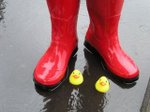

We got a cat when I was fourteen, and as I was the oldest and precocious, I decided I would name it. I named it Socks first, I think, after the White House cat (naturally). But then seeing as our cat didn't have socks, I decided to name it Tim Johnson instead, which was the name of the dog in To Kill A Mockingbird, and I liked the idea of pets with surnames. But that was stupid, so I changed the cat's name to Daisy, and I can't remember why. Then we found out that Daisy was a Tom, so I decided she would be called Casey (at the bat?). And then when I decided to change the cat's name next, my family called it off and Casey the cat stayed, though I never called it that. I always called it Cat, because I'd seen Breakfast at Tiffanys, and wanted to go Golightly.
So this was why I was apprehensive about naming my child. Though I've always found names fascinating and entrancing, I'm fickle about them. In many ways, cats and children are different creatures (so I've found of late), and you can only change a daughter's name so many times if you must do it at all. How to pick a name that would stick?
The first name I ever loved was "Julie", after Mackenzie Phillips' character on One Day at a Time. Julie was also my best friend in grade one, and I adored her and she beautiful, though she was sensitive about her hairy arms. I went through an "Ellen" phase, after the character on Family Ties, I think. I watched far too much television; I would have died to have been named "Jo". I fell in love with "Bianca", not from Shakespeare, but from Shelley Long's character's sister in the movie Hello Again. I was particularly impressionable, and agreed that "Cordelia" was the most exquisite name imaginable. I loved the name "Zoe" for a while, and after I read Louise Fitzhugh's The Long Secret, I thought "Zeeney" was similarly cool, though she'd not been the most appetizing of characters. And these name fixations would go on and on, influenced by all kinds of sitcoms, films and pop stars. I kept ever-changing lists of what my future daughters would be called, though it never occurred to me to think much about a son.
Strange that Louise Fitzhugh ultimately did decide my child's name. Baby was not to be Zeeney after all (which is good) but Harriet, after the book from which The Long Secret was a sequel. And I'd never read Harriet the Spy until last year, actually, after I heard this feature on NPR. But I fell in love with Ms. Welsch, and her name topped my list. I knew immediately that I wanted a little Harriet of my own one day. I couldn't think of anyone better to be named after-- such a feisty, clever, independent, hilarious, and wonderful character. Impossible too, which strikes me now as a somewhat fortunate/unfortunate quality to project upon one's child. Perhaps I should have thought it through a little bit more, because this baby fits the bill so far. The name itself means "Home Ruler", which is appropriate, I think. So this is what we've got ourselves in for...
But it sticks. It's belonged to her since the moment we saw her, and I do love that we now know someone with this name-- have a Harriet in our family even! It is a ubiquitous name throughout literature, but all too rare in the real world. I think I'll not stop loving it soon, because it's Harriet's name after all.
Though I do wonder whether she'll thank us for it. If she'll find Harriet M. Welsch as charming as I did. It is a tremendous power, isn't it? Naming a person? Even fictionally, the name is such a determinate and the author certainly bestows innumerable qualities by such a fact. Naming a real person requires as much consideration-- this is destiny. I find it strange that we were handed so much power. At the hospital they asked us her name, we told them, and it was that simple. I would have expected some kind of seminar, or at the very least a lecture (a stern one) about the seriousness of the decision we were about to make based on a 1960s children's novel. Is nothing sacred? Apparently not, but we're three weeks in, and at the very least, I've not wanted to change it yet.
Showing posts with label words. Show all posts
Showing posts with label words. Show all posts
Monday, June 15, 2009
Sunday, March 01, 2009
Prodigy/Prodigal etc.
Prodigy: 1494, "sign, portent, something extraordinary from which omens are drawn," from L. prodigium "sign, omen, portent, prodigy," from pro- "forth" + -igium, a suffix or word of unknown origin, perhaps from *agi-, root of aio "I say". Meaning "child with exceptional abilities" first recorded 1658. Prodigious.
is unrelated to...
Prodigal: c.1450, back-formation from prodigiality (1340), from O.Fr. prodigalite (13c.), from L.L. prodigalitatem (nom. prodigalitas) "wastefulness," from L. prodigus "wasteful," from prodigere "drive away, waste," from pro- "forth" + agere "to drive" . First ref. is to prodigial son, from Vulgate L. filius prodigus (Luke xv.11-32).
...which really has nothing to with sons that go away, and don't be confused by any closeness to...
Progeny: c.1300, from O.Fr. progenie (13c.), from L. progenies "descendants, offspring," from progignere "beget," from pro- "forth" + gignere "to produce, beget."
is unrelated to...
Prodigal: c.1450, back-formation from prodigiality (1340), from O.Fr. prodigalite (13c.), from L.L. prodigalitatem (nom. prodigalitas) "wastefulness," from L. prodigus "wasteful," from prodigere "drive away, waste," from pro- "forth" + agere "to drive" . First ref. is to prodigial son, from Vulgate L. filius prodigus (Luke xv.11-32).
...which really has nothing to with sons that go away, and don't be confused by any closeness to...
Progeny: c.1300, from O.Fr. progenie (13c.), from L. progenies "descendants, offspring," from progignere "beget," from pro- "forth" + gignere "to produce, beget."


Friday, February 13, 2009
Table
I can't quite figure out why I find the first part of the dictionary definition for "table" so delightful, but I really do: "table. 1. a piece of furniture with a flat top and one or more legs, providing a level surface for eating, writing, or working at, playing games on, etc..." Laid out like that, has there ever been anything more charming? Must any world with tables in it not be such a terrible place?
Monday, January 19, 2009
"Because We Want To" by Alison Smith
The few words that I learn
make reality. No, reality exists.
Words push me
into the moving water.
In the morning
I learn words for Lu Ling
while she brushes her teeth.
She's said that she laughs
because she is pregnant
and wants to be happy.
Me too, I've realised, I do
want to be happy.
Today, I say, are you busy?
She says my Japanese
is good, is good!
I say tonight? dinner? together?
She says pizza?
and I say hai.
This is our common language:
eat dinner tonight yes.
And because we've wanted to
we've learned how to say next--
these have become feast days
and we will not stop
until we are satisfied.
--from Alison Smith's gorgeous collection Six Mats and One Year, published by Gaspereau Press, which TSR has informed us recently entered the blogosphere.
make reality. No, reality exists.
Words push me
into the moving water.
In the morning
I learn words for Lu Ling
while she brushes her teeth.
She's said that she laughs
because she is pregnant
and wants to be happy.
Me too, I've realised, I do
want to be happy.
Today, I say, are you busy?
She says my Japanese
is good, is good!
I say tonight? dinner? together?
She says pizza?
and I say hai.
This is our common language:
eat dinner tonight yes.
And because we've wanted to
we've learned how to say next--
these have become feast days
and we will not stop
until we are satisfied.
--from Alison Smith's gorgeous collection Six Mats and One Year, published by Gaspereau Press, which TSR has informed us recently entered the blogosphere.
Saturday, May 24, 2008
Epizoodic
From Bryson's Diction for Writers and Editors:
Epidemic. Strictly speaking, only people can suffer an epidemic (the word means "in or among people"). An outbreak of disease among animals is epizootic.
Epidemic. Strictly speaking, only people can suffer an epidemic (the word means "in or among people"). An outbreak of disease among animals is epizootic.
Tuesday, January 29, 2008
Words I encountered
Words I encountered today whilst reading Nabokov: violaceous; canthus; effluvia; elytra; gouache; basilisk.
Wednesday, January 23, 2008
Cleistogamous
New words I'm fond of are "jactitation", "lintel", "spoor", and "cleistogamous". Now reading Sister Crazy. Also quite pleased that the latest The New Quarterly has arrived in the mail. And it's about time I read AL Kennedy, I think.
Thursday, December 20, 2007
Language: alive, dead or comatose
It is with such joy that I've been reading Issue 72 of Canadian Notes and Queries. This magazine is new to me and though we've only been going out for two days, I can already define it as follows: I can neither put it down, nor cease making notes in the margins. Notes in the margins of a magazine. My friend Rebecca defined it as a cousin of sorts to The New Quarterly, equally all-hit-no-miss in its content, and I concur. I have also learned the words "festschrift", "afarensis", and the Margaret Atwood interview led me to finally look up "abstruse", which is sort of funny, though I don't think she is abstruse at all. (On one trip through the dictionary I also thumbed past "aestival" which might be my new favourite word).
I have found each piece in CNQ provocative, thoughtful and compelling. And though I could probably talk aplenty in response to any of them, in particular I want to point to Charles Foran's "Dumb as a Sack of Hammers" (from his forthcoming book Join the Revolution, Comrade).
Over drinks with an Irish journalist, he is forced to confront "the almost wilful linguistic dullness of most Canadian writers." He acknowledges exceptions, of course, (my own suggestion being George Elliott Clark, who makes a point of it), with French Canadian writing in particular. But Foran finds, in general, that Canadian writing "displayed little or nil impulse to unbutton and dress down on the page. [The writers] were grammatically preservative and idiomatically conservative". Perhaps, Foran posits, Canada is too new. Though his friend counters with Australia ("a linguistic free-for-all"), the Caribbean. And Foran takes grapples with these ideas throughout his piece-- though you'll have to find it and read it yourself to find out how.
The Australian point got me thinking though, about "linguistic free-for-alls". The other example being Cockney rhyming slang, and I suppose fans of "playfulness" delight in this sort of stuff. But I don't. There is a such a thing as trying too hard. You see playfulness's fact of "play" defeats the purpose; it's not real. People don't actually speak this way (or at least most don't), rather people publish gift book slang dictionaries of these "dialects", and is anything less playful than that? A language with a gift book slang dictionary might as well be dead, and though any such Canadian slang dictionary would consist solely of the word "toque" I do not consider this a tragedy. No, not a tragedy at all.
Though of course I will concede the blandness of Canadian English in comparison to most other Englishes, but like Foran ("dumb as a sack of hammers") I could find a few lively embellishments to celebrate. My family lived in the country outside Belleville early in my childhood, and in the twenty-five years since then we've many a time remarked upon our farming neighbours' peculiar expressions, such as "He's as handy as a pocket in a shirt". I knew one man from there who used to say, "Holy doodle." My grandmother used to express bewilderment and frustration with "For the love of Pete." And my other grandma used to talk a lot about shitting through the eye of a needle, but then maybe that was just part of her unique charm. In fiction too-- Flo in Alice Munro's Who Do You Think You Are? is exactly who I mean.
Though it's telling, I suppose, that many of the examples I've given were uttered by people now dead, and the ones who are living probably over eighty. About this, then, there's a whole lot more thinking necessary. Which seems to be the very point of Canadian Notes and Queries so far.
I have found each piece in CNQ provocative, thoughtful and compelling. And though I could probably talk aplenty in response to any of them, in particular I want to point to Charles Foran's "Dumb as a Sack of Hammers" (from his forthcoming book Join the Revolution, Comrade).
Over drinks with an Irish journalist, he is forced to confront "the almost wilful linguistic dullness of most Canadian writers." He acknowledges exceptions, of course, (my own suggestion being George Elliott Clark, who makes a point of it), with French Canadian writing in particular. But Foran finds, in general, that Canadian writing "displayed little or nil impulse to unbutton and dress down on the page. [The writers] were grammatically preservative and idiomatically conservative". Perhaps, Foran posits, Canada is too new. Though his friend counters with Australia ("a linguistic free-for-all"), the Caribbean. And Foran takes grapples with these ideas throughout his piece-- though you'll have to find it and read it yourself to find out how.
The Australian point got me thinking though, about "linguistic free-for-alls". The other example being Cockney rhyming slang, and I suppose fans of "playfulness" delight in this sort of stuff. But I don't. There is a such a thing as trying too hard. You see playfulness's fact of "play" defeats the purpose; it's not real. People don't actually speak this way (or at least most don't), rather people publish gift book slang dictionaries of these "dialects", and is anything less playful than that? A language with a gift book slang dictionary might as well be dead, and though any such Canadian slang dictionary would consist solely of the word "toque" I do not consider this a tragedy. No, not a tragedy at all.
Though of course I will concede the blandness of Canadian English in comparison to most other Englishes, but like Foran ("dumb as a sack of hammers") I could find a few lively embellishments to celebrate. My family lived in the country outside Belleville early in my childhood, and in the twenty-five years since then we've many a time remarked upon our farming neighbours' peculiar expressions, such as "He's as handy as a pocket in a shirt". I knew one man from there who used to say, "Holy doodle." My grandmother used to express bewilderment and frustration with "For the love of Pete." And my other grandma used to talk a lot about shitting through the eye of a needle, but then maybe that was just part of her unique charm. In fiction too-- Flo in Alice Munro's Who Do You Think You Are? is exactly who I mean.
Though it's telling, I suppose, that many of the examples I've given were uttered by people now dead, and the ones who are living probably over eighty. About this, then, there's a whole lot more thinking necessary. Which seems to be the very point of Canadian Notes and Queries so far.
Monday, December 17, 2007
Words I don't know
A wonderful piece in the Guardian Review about (bothering to go about) looking up all those unknown words we encounter all the time. James Meek writes, "For some reason that I have never fully grasped, it is easy for those in the word business to admit any degree of innumeracy ("I'm hopeless with arithmetic"), or helplessness with the daily machinery of their trade ("I don't know anything about computers"), but difficult to speak frankly about not knowing what a word means." Though I suspect it's for the same reason mathematicians don't like to voice their frustrations with long division.
Oh, but there are so many words I don't know. As I've written here before, I decided to collect unknown words once upon a time, to keep them and tame them. It was while I was living in Japan and devouring battered paperbacks by Margaret Drabble, whose vocabulary still far surpasses mine. Inspired by my ESL students, I started writing down new English words in a little black notebook and the list grew and grew. I was hoping for admission to graduate school within the year and my minuscule vocabulary (consisting too much of "fuck" and "cool") seemed like it might be an impediment. So I learned: "sybaritic", "quondam", "recalcitrant", "bathetic", "avuncular". These are words I know, and whenever I see them, I remember I didn't always.
But I stopped collecting-- I don't remember why or when. Probably when we moved to Canada, for it is easier to collect English in a land where it is scarce. I think the why also had something to do with leaving our tiny apartment where pencils (and the walls for that matter) were never out of arm's length--namely I am lazy. But this article by James Meek has inspired me to start again-- really. I'm not anticipating grad school, but it's behind me, which is as good a reason as any to take responsibility for my education now.
Meek writes, "For clarity, we need common, current words; but, used alone, these are commonplace, and as ephemeral as everyday talk. For distinction, we need words not heard every minute, unusual words, large words, foreign words, metaphors; but, used alone, these become bogs, vapours, or at worst, gibberish. What we need is a diction that weds the popular with the dignified, the clear current with the sedgy margins of language and thought."
"Sedge. n. 1. any of various grasslike plants of the family Cyperaceae, esp of the genus Carex with triangular stems, usu. growing in wet areas. 2. an expanse of this plant."-- though actually I can't fathom what he means in this context-- anyone?
Oh, but there are so many words I don't know. As I've written here before, I decided to collect unknown words once upon a time, to keep them and tame them. It was while I was living in Japan and devouring battered paperbacks by Margaret Drabble, whose vocabulary still far surpasses mine. Inspired by my ESL students, I started writing down new English words in a little black notebook and the list grew and grew. I was hoping for admission to graduate school within the year and my minuscule vocabulary (consisting too much of "fuck" and "cool") seemed like it might be an impediment. So I learned: "sybaritic", "quondam", "recalcitrant", "bathetic", "avuncular". These are words I know, and whenever I see them, I remember I didn't always.
But I stopped collecting-- I don't remember why or when. Probably when we moved to Canada, for it is easier to collect English in a land where it is scarce. I think the why also had something to do with leaving our tiny apartment where pencils (and the walls for that matter) were never out of arm's length--namely I am lazy. But this article by James Meek has inspired me to start again-- really. I'm not anticipating grad school, but it's behind me, which is as good a reason as any to take responsibility for my education now.
Meek writes, "For clarity, we need common, current words; but, used alone, these are commonplace, and as ephemeral as everyday talk. For distinction, we need words not heard every minute, unusual words, large words, foreign words, metaphors; but, used alone, these become bogs, vapours, or at worst, gibberish. What we need is a diction that weds the popular with the dignified, the clear current with the sedgy margins of language and thought."
"Sedge. n. 1. any of various grasslike plants of the family Cyperaceae, esp of the genus Carex with triangular stems, usu. growing in wet areas. 2. an expanse of this plant."-- though actually I can't fathom what he means in this context-- anyone?
Thursday, July 19, 2007
Babyish
Yesterday I became obsessed with the word "babyish" after it dawned on me that I hadn't said it in about twenty years. When it used to carry real force, but now it floats like a bubble. I found it amusing that the dictionary says a synonym for "babyish" is "puerile", just because someone who said "puerile" would probably manage to impress me with their vocab, and yet in essence they would just be pronouncing things "babyish". Which, really, is quite immature.
The most lovely word I've learned all day (thanks to Drabble, my vocab instructor) is empyrean.
The most lovely word I've learned all day (thanks to Drabble, my vocab instructor) is empyrean.
Subscribe to:
Posts (Atom)